Because experience matters...

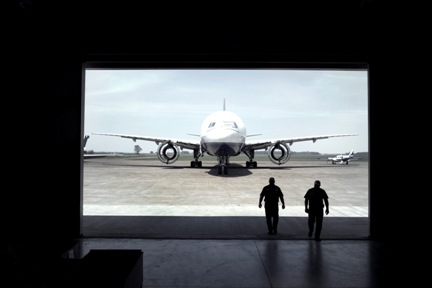
UAM knows aircraft disassembly.

We know the secrets of aircraft afterlife... and we're going to share a few with you.
www.uaminc.com


Wednesday, September 29, 2010

I didn't know I had an IPC...

That’s right an Illustrated Parts Catalogue. It’s published by the company that designed and manufactures the aircraft. All the Boeing aircraft – 737, 747, 757, 767, 777, etc – have a specific IPC authorized by Boeing. The same with Airbus, Embraer, Bombardier and every other aircraft manufacturer.

These catalogs play an essential role in quality control and component identification. Here’s how it works, from my view of the process…

Every component that goes through inventory is identified and tagged by an A&P mechanic. Then, it’s verified by a Quality Control Specialist who checks to make sure the tag matches the identification plate and that the part number formatting is consistent. The IPC enters the inventory process as a necessity when the part manufacturer’s part number is missing.

Quality Control Specialists

The IPC (which is specific to its aircraft type) is referenced to “search” for the part by “system”. The knowledge and experience of the A&P mechanic is critical to this part of the process. If the mechanic can’t identify the part’s basic function – a “blind search and scour” ensues… often more than 500 pages of part illustrations and descriptions. Consider it an aircraft scavenger hunt”… Finally, the component is located in IPC. It’s identified with the IPC reference location is recorded on the tag. The Quality Control Specialist then re-verifies the correct IPC reference and part number, and checks that part number against the numbers used by the part’s manufacturer.

It’s exhausting just thinking about the process, but it all adds up to 100% accuracy + quality + customer satisfaction.

Inventory ID complete - units ready for warehouse

Tuesday, September 7, 2010

First 777 Disassembly

With all the CF6-80 engine activity that’s been going on around here – power assurance test runs, removal and prep for shipping – it got me thinking & snooping… I came across some information that surprised even me (and I got around back in my day). UAM administered the first 777-200 in industry history – right here at the Walnut Ridge Airport back in 2007. And get this… One GE90 engine shipped overseas for a complete overhaul and upgrade to a GE90-94B, and other engine went through disassembly. These photos tell the story better than I do.

Tuesday, August 17, 2010

APU... the little engine that could

My latest colleague, the 747-400, has now been through the engine removal stage of disassembly - very similar to my first hand account back in April.  I figure we've been branded buddies for life, and "end of life", by Boeing and our 747 status.  However, there is at least one remarkable fact that might be of interest to all you passengers.  Check out this Auxiliary Power Unit...  I think of it as the "little engine that could & DOES".  This secondary power unit, located at the rear of the aircraft, often operates the systems that keep you comfortable while the plane is grounded at the gate - before departure and after arrival - including the heating & cooling systems along with electrical systems and the ever-critical lavatories.

If you wonder... why don't I "tout" my very own APU?  As a cargo aircraft, I've got one - it's just not quite as glam keeping cargo cool.

Friday, July 30, 2010

747-400 Joins the End of Life Recycling Program

I knew something BIG was happening last night - there were lots of extra UAM folks, city officials and even a tv crew.  Imagine my surprise to see the arrival of another 747!  This 747-400 is a NEWER model, with better avionics and more marketability.  Boy, does that bird have serious back...

After running the power assurance checks on all 4 engines out on the runway - the team towed this new arrival over to UAM's facility.  Now I share the title of  "tallest structure" in the area.

Tuesday, July 20, 2010

An Aerial View...

It's been said, "a photo is worth many words".  Take a look at this one...  even from my "view from the top", it's impressive to see all these projects.  Customers and clients come to the facility to watch these industry experts in action.  It really brings the UAM story to life - especially to see folks realize the size and dimension of an airframe like mine.  Still impressive after all my years of service - even without my four engines.

Friday, June 25, 2010


We've had a new arrival at the facility. I don't know the complete story yet... we don't seem to have much in common, other than the fact we're bigger than most of the other aircraft. We don't even speak the same language - this guy speaks French. Guess that makes sense, since he's an A310 - a first for UAM. And it's the first aircraft parked in the extended ramp area.

With all the activity and over 30 aircraft in various stages of disassembly, the facility expanded the parking area for new arrivals. Pretty exciting - there will be more of us to swap "sky high" tales.

Monday, June 7, 2010

UAM - The Source for Inventory


With two disassembly teams - there's never a dull moment around here... And there's an improved inventory system that allows the increased volume of component parts to be better organized - saving precious time & money.

Take it from me, I ought to know - units from my very own airframe are pushed along the QC and inventory process faster than ever, so airlines receive a requirement faster - improving dispatch reliability ~ a top priority for any airline.

With two disassembly teams, over 30 aircraft in various stages of disassembly and this improved inventory process - now I know why UAM is THE Source for Inventory.